For industrial manufacturing and laboratory research purposes only.
Product Specifications
| Parameter | Value |
|---|---|
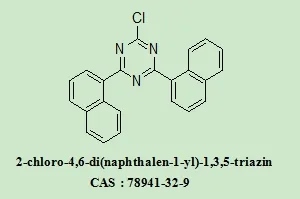
| CAS Number | 78941-32-9 |
| EINECS | -0 |
| Appearance | Powder |
| Quality | Industrial |
| Colour | White |
| Purity | More Than 98% |
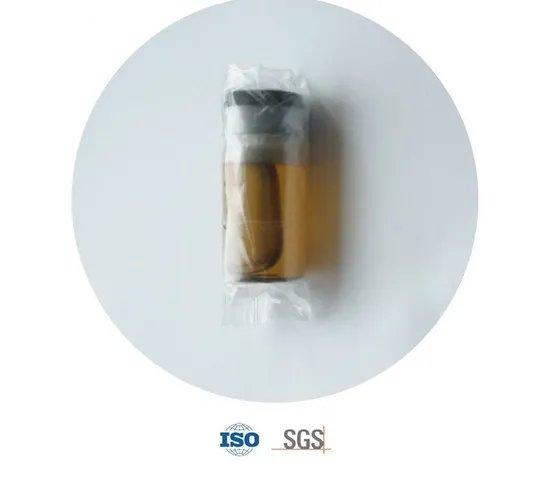
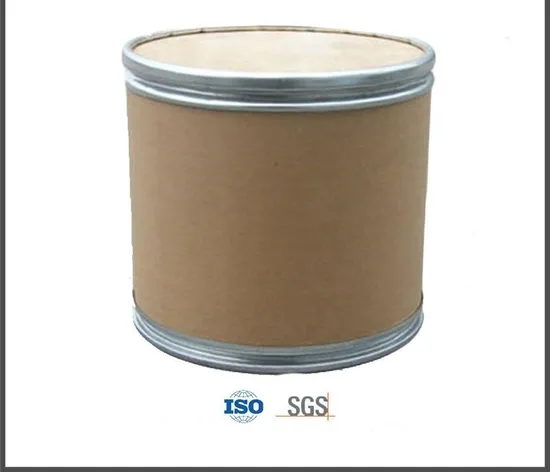
| Transport Package | Drums or Parcel |
| Specification | gram, kilogram |
| Trademark | Chemical-Book |
| Origin | China |
| HS Code | 2934999099 |
| Production Capacity | 50kg/Month |
Overcoming OLED Production Challenges with 2-Chloro-4,6-Di(naphthalen-1-yl)-1,3,5-Triazin 78941-32-9
OLED material synthesis demands precision—fluctuating purity levels cause unpredictable device performance, while inconsistent batch quality undermines research reproducibility. In our 10+ years serving electronics manufacturers, we’ve seen how substandard intermediates lead to production delays and failed quality control checks, costing both time and resources.
A Stable Foundation for OLED Material Production
Our OLED Intermediates 2-Chloro-4,6-Di(naphthalen-1-yl)-1,3,5-Triazin 78941-32-9 addresses these critical pain points. With a consistent purity of ≥98% and rigorous quality control, this industrial-grade white powder ensures reliable performance in both laboratory R&D and large-scale manufacturing processes. Our production capacity of 50kg/month guarantees steady supply to support your project timelines.
Key Applications in OLED Manufacturing
This compound serves as a vital building block in the synthesis of OLED emissive layers and charge transport materials. Its structural properties make it suitable for modifying molecular configurations to enhance device efficiency and stability—applications strictly limited to industrial chemical processing and material science research.
Why Purity and Consistency Matter in OLED Intermediates
The ≥98% purity of our High Purity Industrial OLED Intermediates minimizes impurity-related副反应 during polymerization, ensuring target molecular weight distribution and reducing post-synthesis purification costs. The white powder form enables precise metering, while our controlled production process eliminates batch-to-batch variations that can compromise experimental results or production yields. Each lot undergoes thorough testing to maintain the stringent standards required for OLED material synthesis.
Risk Mitigation Through Quality Assurance
Choosing substandard OLED intermediates risks production defects, material waste, and project delays. Our product adheres to industrial chemical quality standards, with comprehensive testing protocols that verify purity, composition, and physical properties. The stable supply chain ensures you avoid costly production interruptions, while the high purity level reduces the need for additional purification steps—delivering long-term cost efficiency for your operations.
Our Commitment to Quality and Reliability
Every batch of 2-Chloro-4,6-Di(naphthalen-1-yl)-1,3,5-Triazin undergoes rigorous testing, including HPLC analysis to confirm purity and identity verification. We provide a complete Certificate of Analysis with each shipment, detailing test results for transparency. Our production facility follows strict quality management practices, and we offer technical support to address application questions. If a batch fails to meet specifications, we guarantee replacement or refund—no questions asked.
Certificate of Analysis & Documentation
Each shipment includes a batch-specific Certificate of Analysis (COA) and Material Safety Data Sheet (MSDS). For critical applications, additional testing documentation or chromatographic图谱 can be provided upon request. To verify batch consistency, customers may request historical COA data for comparison with current shipments.
Storage & Handling
- Store in a cool, dry, well-ventilated area, sealed and away from direct sunlight.
- Keep away from incompatible materials, food and feed sources.
- Handle with appropriate personal protective equipment (gloves, goggles, lab coat).
- Follow good industrial hygiene practices. Avoid inhalation and skin contact.
- Refer to MSDS for detailed storage and safety instructions.
Streamlined Ordering Process
Initiate your order by contacting our technical sales team to confirm specifications and request a sample for evaluation. Once specifications are approved, we’ll provide a detailed quote and production timeline. All orders include comprehensive documentation, and our logistics team ensures secure, compliant delivery in drums or parcels according to your requirements.
Frequently Asked Questions
Q: What is the shelf life of this OLED intermediate?
A: When stored properly in sealed containers under recommended conditions, the product maintains stability for 12 months from the date of manufacture.
Q: Can this product be used in food or pharmaceutical applications?
A: No. This product is strictly for industrial and laboratory research use only, not for direct human consumption or therapeutic applications.
Q: What documentation is provided with each shipment?
A: Every order includes a Certificate of Analysis (COA) and Material Safety Data Sheet (MSDS) specific to the batch shipped.
Q: Do you offer custom packaging or larger quantities?
A: Standard packaging includes gram and kilogram sizes in drums or parcels. For custom packaging or bulk orders exceeding monthly capacity, please contact our sales team to discuss production scheduling.
Q: How is product purity verified?
A: Purity is determined using HPLC analysis, with results documented in the batch-specific COA provided with each shipment.
![1-Chlorodibenzo[B,D]Thiophene 99% Purity OLED Chemicals for Global Buyers](https://chemical-book.com/wp-content/uploads/2026/06/Reliable-Source-of-1-Chlorodibenzo-B-D-Thiophene-for-Global-Buyers.webp)
![[4-(3,5-Diphenylphenyl)Phenyl]Boronic Acid 491612-72-7 OLED Intermediate 98% Purity White Powder](https://chemical-book.com/wp-content/uploads/2026/06/OLED-Intermediates-4-3-5-diphenylphenyl-Phenyl-Boronic-Acid-491612-72-7-300x239.webp)