How to Choose the Right Additive for Your Formulation?
Last month, a buyer asked me to recommend a stabilizer for their semaglutide injection. I asked what concentration they were working with. They said they hadn't decided yet. That conversation showed me why most buyers struggle with additive selection—they're looking for the right product before they define the problem.
The right additive is not the one with the highest purity or the lowest price. It's the one that solves a specific stability risk in your formulation task, under your storage conditions, within your regulatory framework. You need to match the additive's function to the risk you're controlling, not just its specification to your budget.

Most buyers approach me with a purity number in mind. But purity tells you what's in the bottle, not whether it will keep your peptide stable for six months at room temperature. I see the same pattern in every inquiry—buyers skip the risk assessment and jump straight to supplier comparison. That's why I wrote this guide.
Why Do Buyers Confuse Additive Functions?
When you search for "the right additive," you get hundreds of products with overlapping claims. One supplier lists their excipient as a stabilizer and preservative. Another calls the same compound a pH adjuster. You don't know which label matches your need because you're solving for a product name instead of a stability problem.
I talk to three types of buyers every week—pharma raw material importers, beauty ingredient distributors, and supplement manufacturers. They all ask similar questions, but they're solving different problems. A pharma buyer needs batch-to-batch consistency for a tirzepatide injection that will pass USP microbial limits.[^1] A beauty buyer needs a peptide serum that won't oxidize in a glass dropper bottle after three months. A supplement buyer needs an oral capsule formulation that stays stable in humid climates without exceeding their cost target.
Additives serve four main functions—stabilizers prevent peptide degradation, preservatives block microbial growth, pH adjusters maintain the solution environment, and fillers provide volume or improve handling.[^2] Each function addresses a different failure mode. If you choose a preservative when you need a stabilizer, your peptide will degrade even if microbial counts stay low.

Here's what I see when buyers mix up these roles:
| Function | What It Controls | Wrong Application | What Happens |
|---|---|---|---|
| Stabilizer | Peptide structure integrity | Used as preservative | Bacteria grow, peptide stays intact but formulation fails microbial test |
| Preservative | Microbial contamination | Used as stabilizer | Peptide degrades, batch loses potency before expiry |
| pH Adjuster | Solution acidity/alkalinity | Used without buffering capacity check | pH drifts during storage, peptide aggregates |
| Filler | Volume and flowability | Used to reduce active ingredient cost | Regulatory audit flags undeclared excipient substitution |
I had a buyer who added a common pharmaceutical filler to their retatrutide powder to improve capsule filling. They thought it was inert. Three months later, their batch showed clumping. The filler absorbed moisture in their warehouse, which triggered peptide aggregation. They weren't controlling a stability risk—they created one by adding an additive without checking its interaction with their storage environment.
The decision starts with the failure mode you're preventing. If your peptide oxidizes under light exposure, you need an antioxidant stabilizer. If it hydrolyzes at neutral pH, you need a buffering agent. If your production environment introduces contamination, you need a preservative. You can't pick the additive until you know which risk you're managing.
Does High Purity Guarantee Batch Stability?
I get asked about purity specifications in almost every inquiry. Buyers assume that 98% purity means stable formulation. It doesn't. Purity measures what's in the additive, not how it behaves with your peptide over time.
Last year, a beauty buyer sourced a preservative with 99.5% purity for their anti-aging serum containing hGH fragment peptide. They followed the supplier's recommended concentration. After four weeks at room temperature, their stability test showed peptide aggregation[^3]. The preservative didn't react chemically—it changed the ionic strength of the solution, which destabilized the peptide's tertiary structure.[^4] High purity didn't prevent the failure because purity doesn't predict compatibility.[^5]
Batch stability depends on three factors that purity specs don't cover—compatibility with your specific peptide structure, interaction with other formulation components, and behavior under your storage conditions. A preservative that works in a semaglutide injection might destabilize a tirzepatide formulation because the peptides have different aggregation sensitivities.
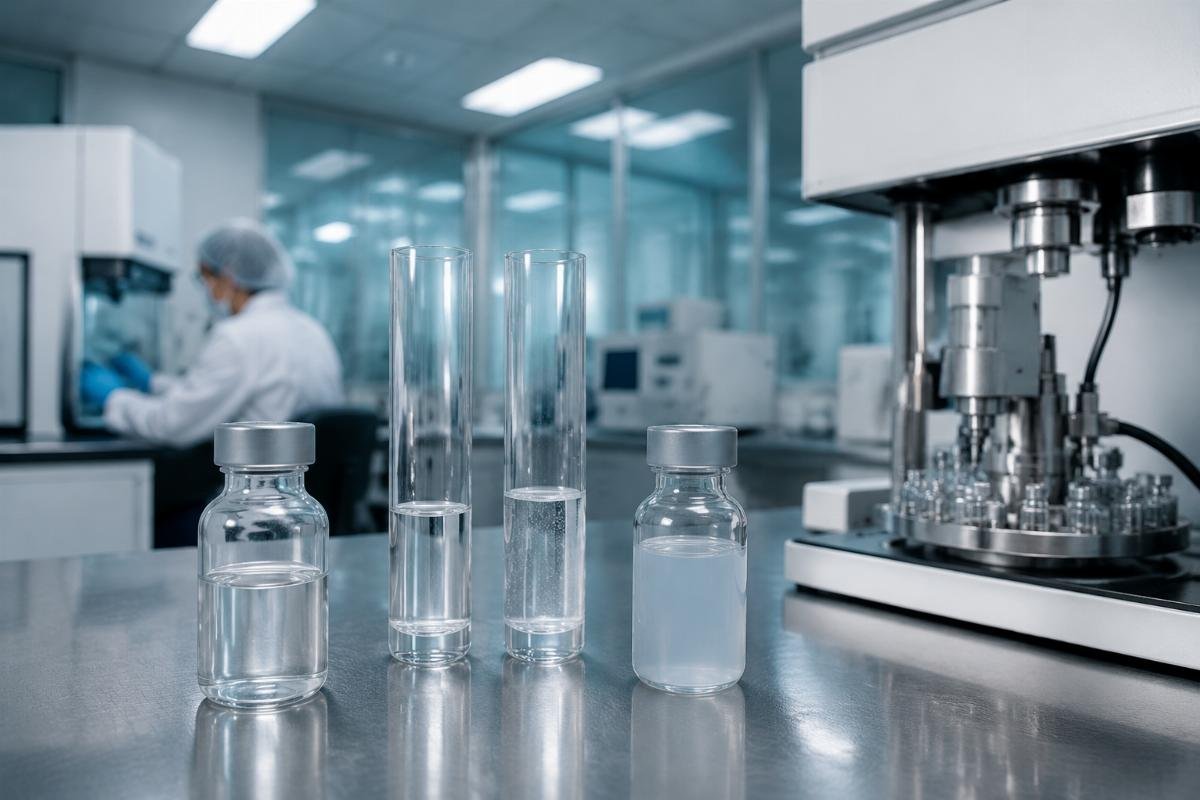
Here's the compatibility check most buyers skip:
| Question | Why It Matters | Example of Missed Check |
|---|---|---|
| What peptide concentration are you formulating? | Additive effects change at different peptide loads | A stabilizer works at 5mg/mL but causes precipitation at 20mg/mL |
| What other ingredients are in your formulation? | Multi-component systems create unexpected interactions | pH adjuster + preservative + peptide forms insoluble complex |
| What storage temperature will your product face? | Degradation kinetics change with temperature | Stabilizer effective at 2-8°C loses function at 25°C |
| What container closure system are you using? | Container materials leach compounds or adsorb additives | Glass vials adsorb preservative, reducing effective concentration |
| How long is your target shelf life? | Short-term stability doesn't predict long-term performance | Peptide stable for 3 months degrades by month 6 |
I had a pharma buyer who switched from one mannitol supplier to another because of a 15% price difference. Both suppliers provided 98% purity certificates. Two batches into production, their dissolution test failed. The new mannitol had a different particle size distribution, which affected the freeze-drying cycle and created peptide aggregates during reconstitution.[^6] Same purity, different physical properties, incompatible with their process.
Purity is a minimum threshold, not a compatibility guarantee. You need to ask suppliers about batch-to-batch variability in physical properties, not just chemical purity. For peptide formulations, particle size, moisture content, and residual solvents can matter more than the difference between 98% and 99% purity. I always tell buyers to request the full certificate of analysis, not just the purity line. If a supplier won't share moisture content data or particle size distribution, that's a red flag for formulation risk.
How Do Pharma, Beauty and Supplement Buyers Prioritize Differently?
When I talk to a pharma buyer versus a beauty buyer versus a supplement buyer, I'm answering the same technical questions with different constraint priorities. The peptide chemistry doesn't change, but what matters to their business does.
A pharma buyer called me about adding a buffer system to their GLP-1 peptide injection. Their first question was about USP monograph compliance. They needed documentation that proved batch consistency across three validation lots. Their regulatory team required a drug master file reference for the buffer components.[^7] Price was not in the top three discussion points. Their constraint was passing regulatory inspection, not unit cost.
Pharma buyers optimize for regulatory certainty and batch reproducibility. Beauty buyers optimize for skin safety and shelf life at room temperature. Supplement buyers optimize for cost control and compliance across multiple export markets. Each group needs different documentation from the same additive supplier.
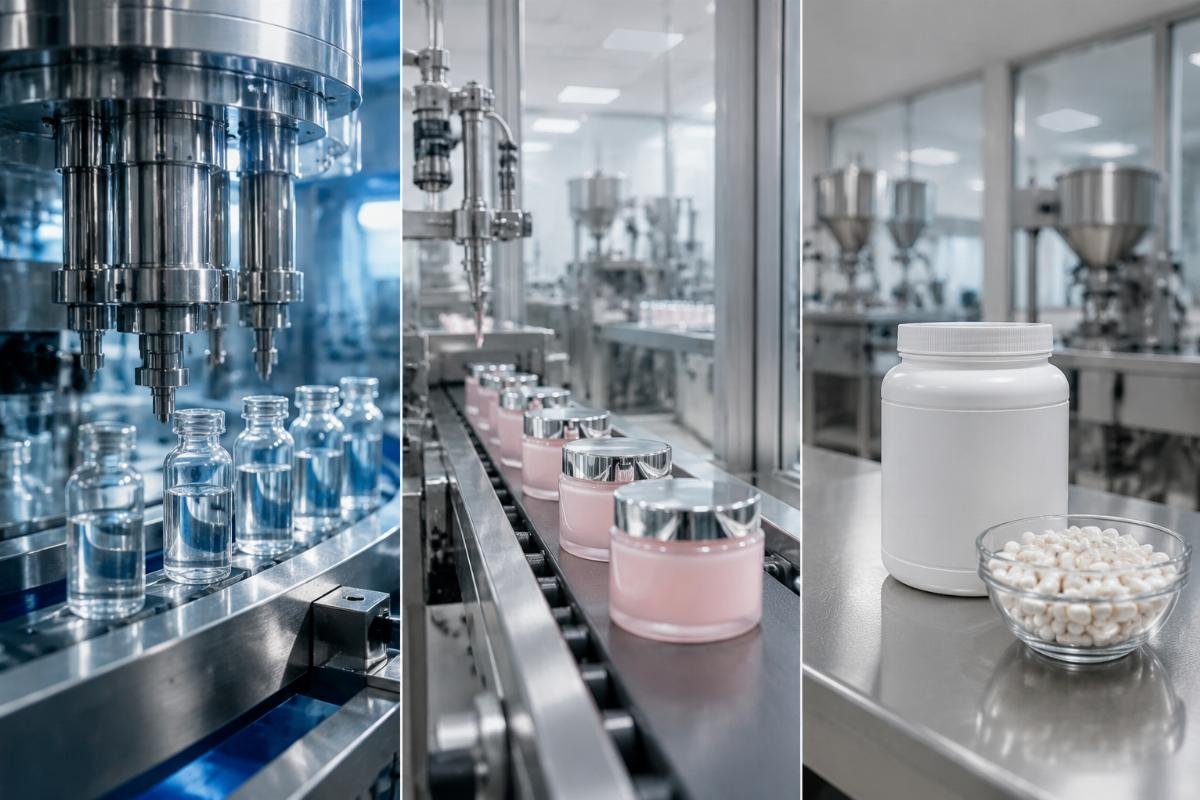
A week later, a beauty buyer asked about the same buffer system for a peptide serum. They didn't ask about USP compliance—they asked about skin irritation data and compatibility with common cosmetic oils. Their concern was oxidative stability under bathroom humidity, not sterility assurance. They needed a preservative system that worked in a non-refrigerated dropper bottle with repeated air exposure. Their regulatory requirement was a safety assessment under EU cosmetics regulation[^8], which asks different questions than a pharma dossier.
Then a supplement buyer inquired about the buffer for an oral peptide capsule. They asked about cost per kilogram first. Their target was a retail price point that required keeping excipient costs under 8% of the finished product. They needed the additive to be approved in the US, EU, and Southeast Asian markets simultaneously because they were doing multi-region distribution. They weren't formulating for sterility—they were formulating for a two-year shelf life in tropical climates without refrigeration.
Here's how the same additive decision splits across buyer types:
| Buyer Type | Primary Constraint | Secondary Constraint | Documentation Need | Typical Trade-off |
|---|---|---|---|---|
| Pharma | USP/EP monograph compliance | Batch consistency (RSD <2%) | DMF, full analytical data package | Pay premium for regulatory certainty |
| Beauty | Skin safety at use concentration | Stability in cosmetic base (oil, water, emulsion) | INCI listing, safety assessment data | Balance preservative efficacy vs irritation risk |
| Supplement | Cost per unit dose | Multi-region regulatory clearance | Food-grade certification, allergen statements | Accept narrower stability margin to hit price |
I had a pharma buyer reject a stabilizer because the supplier couldn't provide three consecutive batch COAs with less than 2% relative standard deviation in the key impurity profile. That same stabilizer was acceptable to a beauty buyer who cared more about the six-month color stability data than batch-to-batch impurity variation. The supplement buyer wanted that stabilizer only if it was available in 25kg drums at a price 30% below the pharma-grade version, and they were willing to accept a shorter retest date.
The decision sequence is different for each group. Pharma buyers start with regulatory compliance, then check technical fit, then negotiate price. Beauty buyers start with safety and sensory properties, then check stability, then optimize for formulation aesthetics. Supplement buyers start with cost and multi-region compliance, then fit the technical requirement into that budget. I can't give the same additive recommendation to all three because their failure modes have different business consequences.
What Decision Sequence Should You Follow?
Most buyers start with a supplier comparison spreadsheet. They list products by price and purity, then pick the one with the best cost-to-spec ratio. That's why they end up asking me to troubleshoot formulation failures three months into production. They skipped the decision sequence that maps their task to the risk they need to control.
I walk buyers through three questions before I recommend any additive. These questions force them to define the problem before they evaluate products.
The decision sequence is formulation task, then application environment, then quality standard. Your formulation task defines which stability risk matters most. Your application environment determines which failure modes you must prevent. Your quality standard sets the documentation threshold you need to clear. Only after you answer these three can you compare supplier options meaningfully.

Here's what the sequence looks like in real buyer conversations:
Step 1: Define Your Formulation Task
I ask buyers to describe what their peptide needs to do in the final product, not what the peptide is. A buyer might say they're formulating tirzepatide. That tells me the molecule, not the task. I need to know: is this a lyophilized injection that gets reconstituted before use, a pre-filled syringe that stays liquid for six months, or an oral formulation that survives stomach acid? Each task creates different stability challenges.
For a lyophilized injection, the main risk is aggregation during the freeze-drying cycle and reconstitution. I recommend stabilizers that protect during ice crystal formation and dissolution. For a liquid pre-filled syringe, the risk is peptide degradation over months of refrigerated storage, plus deamidation if pH drifts[^9]. I recommend a buffering system with tight pH control and potentially a chelating agent to prevent metal-catalyzed oxidation. For an oral formulation, the risk is gastric acid degradation and enzymatic cleavage, so the task is different—you need enteric protection, not solution stability[^10].
A beauty buyer once asked for a preservative for their peptide eye cream. I asked whether the cream was anhydrous or water-based. They said water-based. That changed the task from preventing oxidation to preventing microbial growth in a high-water formulation that customers will open and close daily. The additive choice flipped from antioxidant to broad-spectrum preservative.
Step 2: Map Your Application Environment
After I know the task, I ask about the environment the product will face from manufacturing to consumer use. A peptide that stays in a controlled warehouse is different from one that ships to tropical climates, sits on retail shelves under fluorescent lights, and gets stored in a customer's bathroom.
I ask: what's your target shelf life, what storage temperature can you guarantee, what packaging are you using, and how many times will the product be opened before it's consumed? A pharma buyer might answer: two years, 2-8°C, Type I glass vials, single use. A supplement buyer might answer: two years, 25°C, HDPE bottles, 60 doses per bottle. Those environments create completely different stability risk profiles.
A year ago, a buyer wanted to use a peptide formulation designed for refrigerated storage in a room-temperature-stable product. They thought they could just increase the preservative concentration. That doesn't work—higher temperature accelerates all degradation pathways[^11], not just microbial growth. We had to add both a buffering system to control pH drift and an antioxidant to prevent oxidative degradation, plus switch to a different preservative with better thermal stability. The additive strategy changed entirely when the environment changed.
Step 3: Identify Your Quality Standard
The last question is what regulatory and documentation threshold you must clear. A pharma buyer needs USP or EP compliance with full traceability to support a drug application. A beauty buyer needs INCI listing and safety assessment data under ISO 22716 or EU cosmetics regulation. A supplement buyer needs food-grade certification and compliance statements for the markets they're targeting.
I can't assume the standard from the product type. I had a supplement buyer who was supplying ingredients to a pharma partner for clinical trials. They needed pharma-grade documentation even though the product was classified as a supplement in the end market. If I'd recommended food-grade additives, their customer would have rejected the batch[^12].
Here's how the decision sequence changes recommendations:
| Task | Environment | Standard | Recommended Additive Strategy |
|---|---|---|---|
| Liquid injection | 2-8°C, single-use vial | USP | pH buffer + preservative for multi-dose compliance, or buffer alone if single dose |
| Liquid injection | 25°C, pre-filled syringe | USP | Buffer + antioxidant + chelator for long-term stability |
| Topical serum | 25°C, dropper bottle, 60 uses | EU Cosmetics | Broad-spectrum preservative + antioxidant for oxidation under air exposure |
| Oral capsule | 30°C/75% RH, blister pack | Food grade | Desiccant in packaging, minimal preservative, focus on moisture barrier |
When a buyer skips this sequence, they make decisions based on incomplete problem definition. They pick an additive that solves a risk they don't have, or miss a risk they'll face in six months. I've seen buyers choose the cheapest option because they didn't map their environment constraints, then pay for a product recall when the formulation failed at the customer's location.
Conclusion
Choosing the right additive starts with defining the stability risk your formulation faces, not comparing supplier specifications. Map your formulation task, your storage environment, and your quality standard before you request quotes. That sequence turns additive selection from a purchasing decision into a risk control strategy.
[^1]: "[PDF] Pharmaceutical Microbiology Manual - FDA", https://www.fda.gov/media/88801/download. The United States Pharmacopeia establishes microbial limits and sterility testing requirements for pharmaceutical products including injections through chapters such as <71> Sterility Tests and <61> Microbial Examination of Nonsterile Products: Microbial Enumeration Tests. Evidence role: general_support; source type: government. Supports: the existence of USP microbial limits standards for pharmaceutical injections. [^2]: "Inactive Ingredients in Approved Drug Products Search - FDA", https://www.fda.gov/drugs/drug-approvals-and-databases/inactive-ingredients-approved-drug-products-search-frequently-asked-questions. Pharmaceutical excipients are classified by function in regulatory databases, including stabilizers (which maintain active ingredient integrity), preservatives (antimicrobial agents), pH adjusters (buffering systems), and various other functional categories, though specific classification schemes may vary by regulatory authority. Evidence role: definition; source type: government. Supports: the functional classification of pharmaceutical excipients into stabilizers, preservatives, pH adjusters, and other categories. Scope note: The exact four-category framework presented may be a simplified version of more detailed regulatory classifications [^3]: "Factors affecting the physical stability (aggregation) of peptide ...", https://pmc.ncbi.nlm.nih.gov/articles/PMC5665799/. Peptide and protein aggregation is a well-documented degradation pathway in biopharmaceutical products, involving the association of partially unfolded or misfolded molecules into larger assemblies, which can affect product efficacy, safety, and immunogenicity. Evidence role: general_support; source type: paper. Supports: that peptide aggregation is a recognized stability concern in pharmaceutical formulations. [^4]: "Effects of ionic strength on the folding and stability of SAMP1 ... - PMC", https://pmc.ncbi.nlm.nih.gov/articles/PMC8874027/. Ionic strength influences protein and peptide stability through effects on electrostatic interactions that stabilize tertiary structure; changes in ionic environment can disrupt salt bridges and alter the balance of attractive and repulsive forces that maintain native conformation. Evidence role: mechanism; source type: paper. Supports: the mechanism by which ionic strength changes affect peptide structural stability. [^5]: "Drug-Excipient Compatibility Study Through a Novel Vial-in ... - PMC", https://pmc.ncbi.nlm.nih.gov/articles/PMC10169295/. Pharmaceutical science literature recognizes that excipient functionality depends on multiple attributes beyond chemical purity, including physical properties (particle size, morphology, moisture content), which can significantly affect formulation performance and drug product stability even when chemical purity meets specifications. Evidence role: expert_consensus; source type: paper. Supports: that chemical purity alone is insufficient to predict excipient performance in formulations. [^6]: "Role of freeze-drying in the presence of mannitol on the ... - PMC - NIH", https://pmc.ncbi.nlm.nih.gov/articles/PMC5736393/. Mannitol's particle size distribution and polymorphic form influence its crystallization behavior during lyophilization, which can affect ice crystal formation, freezing rates, and the microenvironment experienced by proteins or peptides, potentially impacting their stability during the freeze-drying process and reconstitution. Evidence role: mechanism; source type: paper. Supports: that mannitol particle size and crystallization behavior during freeze-drying can affect protein/peptide stability. Scope note: The specific mechanism linking particle size to aggregation may depend on multiple formulation and process variables [^7]: "Types of Drug Master Files (DMFs) - FDA", https://www.fda.gov/drugs/drug-master-files-dmfs/types-drug-master-files-dmfs. The U.S. FDA Drug Master File (DMF) system allows manufacturers of pharmaceutical ingredients, including excipients, to submit confidential detailed information about their facilities, processes, and quality controls to support regulatory applications, with Type II DMFs specifically covering drug substances, intermediates, and materials used in their preparation. Evidence role: general_support; source type: government. Supports: that Drug Master Files serve as regulatory documentation for pharmaceutical ingredients. Scope note: DMF submission is voluntary; regulatory requirements vary by jurisdiction and specific application context [^8]: "EC Regulation 1223/2009 on cosmetics - Wikipedia", https://en.wikipedia.org/wiki/EC_Regulation_1223/2009_on_cosmetics. Regulation (EC) No 1223/2009 establishes the regulatory framework for cosmetic products in the European Union, requiring manufacturers to compile a Product Information File including a safety assessment conducted by a qualified safety assessor before placing products on the market. Evidence role: general_support; source type: government. Supports: the existence of EU regulatory requirements for cosmetic products including safety assessment. [^9]: "Engineering deamidation-susceptible asparagines leads to ... - PMC", https://pmc.ncbi.nlm.nih.gov/articles/PMC4287003/. Deamidation of asparagine and glutamine residues in peptides and proteins is pH-dependent, with rates typically increasing at higher pH values through nucleophilic attack mechanisms; pH control is therefore critical for minimizing this degradation pathway in peptide formulations. Evidence role: mechanism; source type: paper. Supports: that pH influences the rate of peptide deamidation reactions. [^10]: "Strategies for overcoming multiple barriers of oral administration of ...", https://pmc.ncbi.nlm.nih.gov/articles/PMC12830292/. Oral delivery of peptides faces challenges from gastric acid and proteolytic enzymes; enteric coating systems that resist dissolution at gastric pH but release in the higher pH environment of the intestine are commonly employed as a protective strategy, though this approach addresses only one of multiple barriers to oral peptide bioavailability. Evidence role: general_support; source type: paper. Supports: that enteric protection is a strategy used for oral peptide formulations to protect against gastric degradation. Scope note: Enteric protection alone does not ensure successful oral peptide delivery; intestinal permeability and enzymatic degradation remain significant challenges [^11]: "Drug Stability: ICH versus Accelerated Predictive Stability Studies", https://pmc.ncbi.nlm.nih.gov/articles/PMC9693625/. The Arrhenius equation describes the temperature dependence of reaction rates, showing that chemical degradation reactions generally proceed faster at higher temperatures; this principle underlies accelerated stability testing protocols in pharmaceutical development, where elevated temperatures are used to predict long-term stability. Evidence role: mechanism; source type: paper. Supports: that increased temperature accelerates chemical degradation reactions. [^12]: "[PDF] Quality Agreement", https://frederick.cancer.gov/sites/default/files/2022-04/Qty_Agreement_Template.pdf. Good Manufacturing Practice (GMP) principles require that pharmaceutical materials and products meet predetermined specifications before release; batches failing to meet agreed-upon quality standards are typically rejected or placed on hold pending investigation and disposition decision. Evidence role: general_support; source type: education. Supports: that pharmaceutical manufacturers reject batches failing to meet predetermined specifications.