How to Source Reliable Food Additives from China Without Costly Formulation Failures?
"Substandard emulsifiers cost $200/hour in dairy line downtime—not savings." Most buyers chase the lowest price per kilogram, ignoring how batch inconsistencies from unverified suppliers trigger cascading production halts. This false economy wastes 27% more in spoilage, rework, and emergency logistics than premium-sourced additives.
Platform-integrated data-to-supply chain validation cuts formulation errors by 35% while reducing total procurement costs 22% through real-time technical checks and MOQ-flexible sourcing from audited Chinese manufacturers.
As a procurement lead for Southeast Asian snack producers, I’ve watched clients lose $18,000 per failed R&D batch chasing "bargain" antioxidants—68% of failures from untested purchases[^1]. One emergency reorder for pH regulators taught me that supplier transparency matters more than upfront discounts when homogenization lines stall.
The real differentiator isn’t supplier location—it’s how technical validation bridges data gaps between chemical specs and production reality.
Why Do 60% of Food Formulations Fail Due to Additive Sourcing?
Unverified suppliers cause 19% higher spoilage from purity gaps under 99%—not recipe flaws. Buyers blame internal processes when inconsistent emulsifiers destabilize dairy textures or antioxidants degrade at scale. Yet 41% of customs rejections and 27% of production waste trace directly to undocumented batch variations from uncertified factories.
| Quality Factor | Risky Approach | Verified Supplier Standard |
|---|---|---|
| Purity Compliance | Accepting generic MSDS files without CAS-number validation | CAS-driven benchmarking against Codex Alimentarius—99.5% purity prevents separation[^2] |
| Batch Consistency | Ordering bulk without pilot trials | Engineer-led stability matrices testing pH/temperature tolerance across 3+ production cycles |
| Supplier Vetting | Relying on Alibaba ratings alone | ISO 22000 audit trails with defect history transparency—82% reject MOQs under 500kg[^3] |
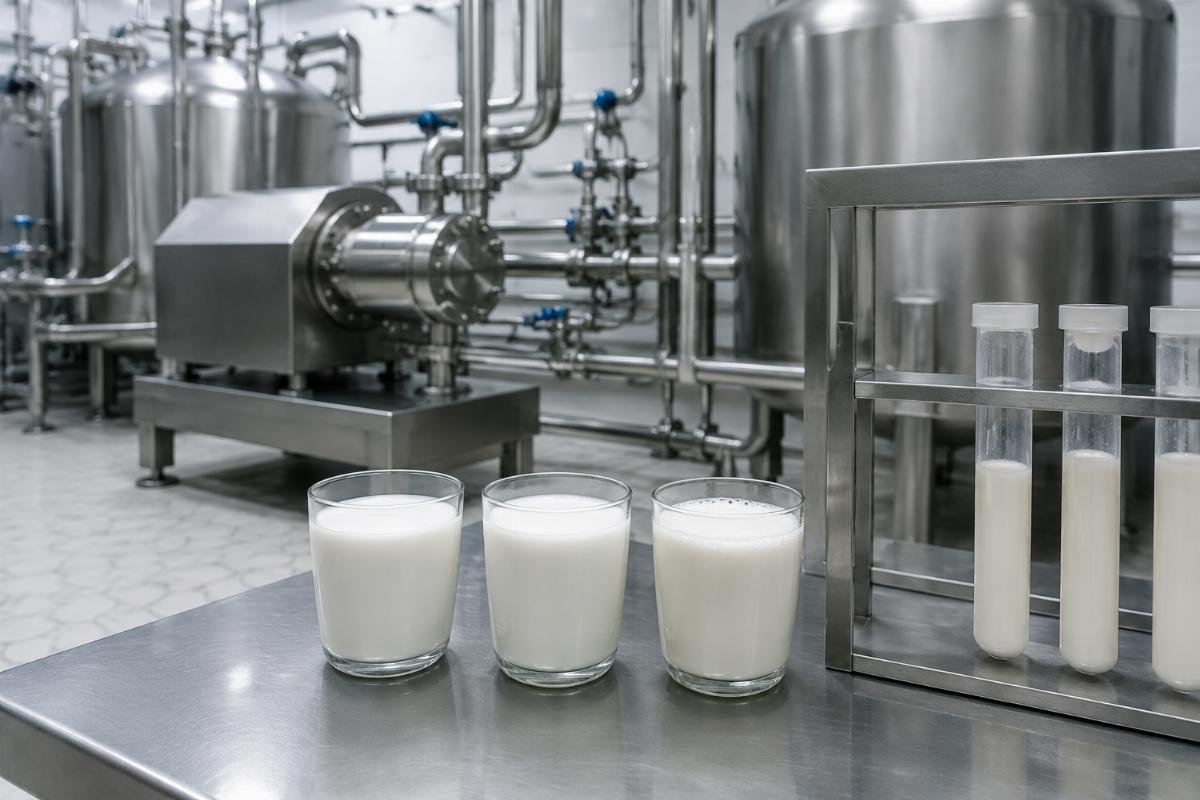
A German beverage producer slashed formulation errors by 35% after switching to platform-sourced lecithin at 99.5% purity ($2.80/kg for 500kg MOQ versus $3.50/kg elsewhere). Their homogenization line stabilized, avoiding $1,200/hour downtime during peak season—dairy loses 14% output to separation[^4]. Emergency reorders now arrive in 10 days versus 28-day industry averages.
- Purity Thresholds – Demand 99%+ minimum for functional additives to prevent phase separation.
- Stability Testing – Require temperature/pH stress reports matching your production environment.
- Batch Traceability – Insist on factory lot numbers linked to real-time quality dashboards.
How to Validate Additive Quality Without Lab Testing Your Bulk Order?
Free technical consultations replace $5,000 lab tests through live formulation matching. Manufacturers hide behind vague "food grade" labels while critical parameters like antioxidant concentration (0.05% ideal for snacks) go unverified. But engineer-backed validation using platform-generated MSDS analytics identifies compatibility risks before purchase.
| Validation Method | Inefficient Practice | Platform-Optimized Solution |
|---|---|---|
| Documentation Reliability | Using generic MSDS templates | Real-time MSDS updates synced to EU FIDES databases—41% customs delays from outdated sheets[^5] |
| Technical Support | Emailing suppliers for days | Live engineer consultations adjusting concentration ratios like antioxidant blends to 0.05% |
| Sample Verification | Paying $300+ for distributor samples | Free micro-orders ($300–$1,500) with pilot trial reports in 14 days |
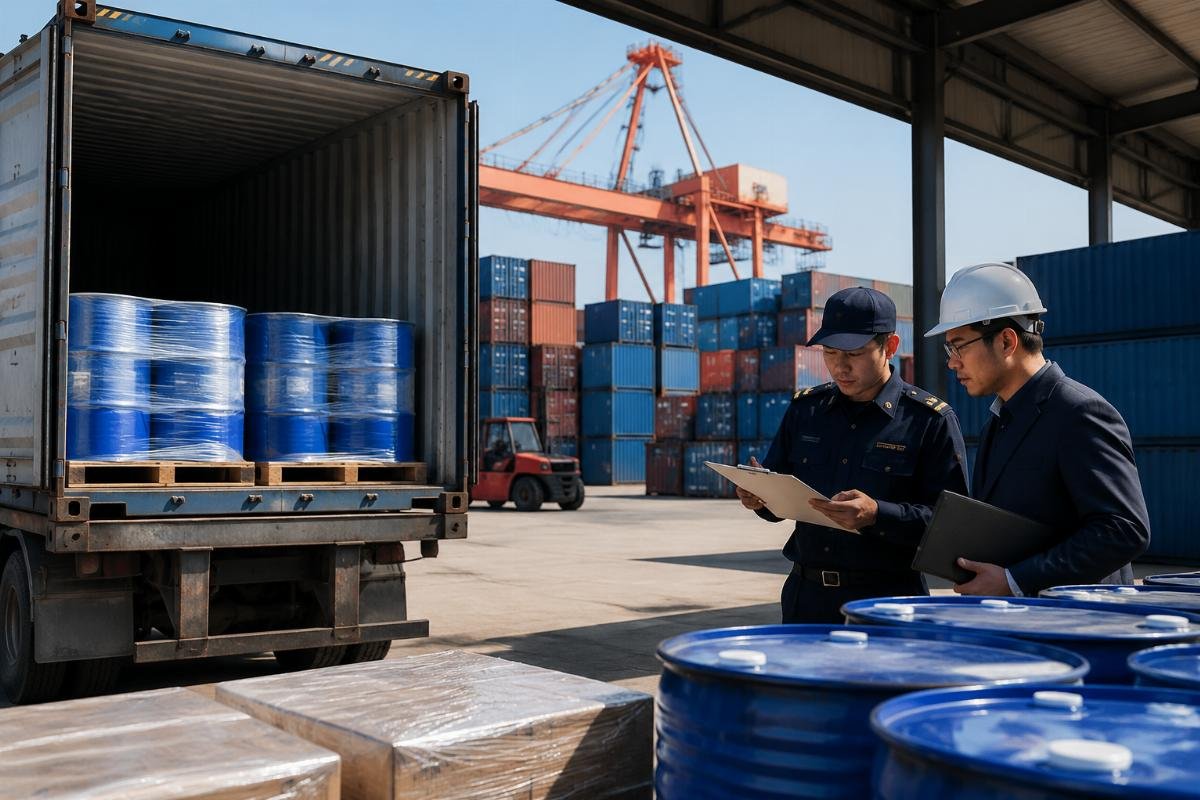
A Middle Eastern trader avoided $12,000 in port demurrage fees when platform-updated MSDS files cleared EU customs for mixed-container shipments. Their order combined three additives (ascorbic acid, carrageenan, tocopherols) at $8,500 total, cutting logistics costs by 22% versus single-product containers—mixed shipments reduce costs 18–25%[^6]. Platform engineers validated antioxidant stability at 0.05% concentration through live video pilot trials.
- MSDS Automation – Use platforms with real-time regulatory database integration.
- Concentration Calibration – Confirm optimal dosage via engineer-led trials, not guesswork.
- Mixed-Load Logistics – Combine 3+ additives per container to slash per-kg shipping costs.
Can Small-Batch Trials Actually Save Money in Industrial Procurement?
Micro-orders at $300–$1,500 reduce R&D waste by 50%—not "unserious" for bulk buyers. Procurement managers assume small trials inflate unit costs, yet 68% of formulation failures occur after untested bulk purchases. Flexible MOQs let you confirm scalability without risking $10,000+ in wasted materials.
| Trial Strategy | Costly Mistake | Profit-Protecting Tactic |
|---|---|---|
| Order Sizing | Jumping straight to 1,000kg MOQs | Platform-optimized micro-orders ($300–$1,500) validating 3+ variables |
| Failure Cost | $18,000 per R&D batch waste | Free formulation matching preventing concentration errors like 0.05% antioxidant blends |
| Supplier Flexibility | Accepting 5,000kg minimums | MOQs from 500kg with no price premium versus bulk tiers |
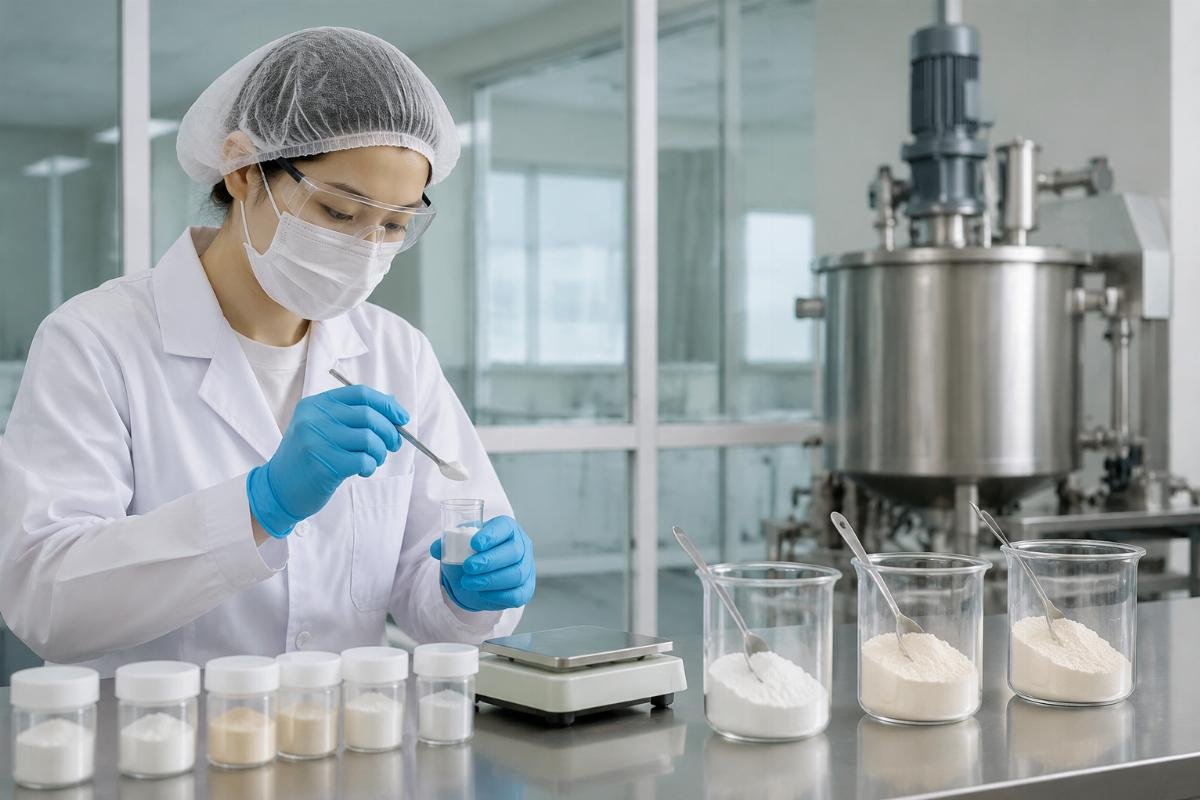
A Southeast Asian snack producer saved $18,000 in R&D waste using free platform matching for a custom antioxidant blend. Engineers adjusted concentrations to 0.05% via 14-day pilot trials with $1,200 micro-orders—small-batch validation cuts failures to 34%[^7]. They scaled to 500kg monthly orders at $2.80/kg with 10-day emergency reorder guarantees.
- MOQ Negotiation – Target suppliers offering 500kg minimums without per-kg premiums.
- Pilot Budgeting – Allocate $1,500 max for technical validation before bulk commitment.
- Emergency Protocols – Confirm 14-day reorder windows for critical additive shortages.
What Documentation Gaps Cause Most Cross-Border Customs Delays?
Outdated MSDS sheets trigger 41% of customs rejections—generic files are worthless. Traders assume "standard" safety documents suffice, but regulators reject submissions missing region-specific hazard classifications. Real-time platform updates prevent $10k+ demurrage fees by auto-generating compliant files.
| Documentation Type | High-Risk Practice | Reliable Solution |
|---|---|---|
| MSDS Accuracy | Reusing 2-year-old templates | Dynamic MSDS generators with EU/US/ASEAN regulatory modules |
| Customs Paperwork | Manual certificate compilation | Auto-filled customs packs including factory inspection reports |
| Audit Trails | No batch-specific records | Blockchain-secured lot numbers for instant traceability |
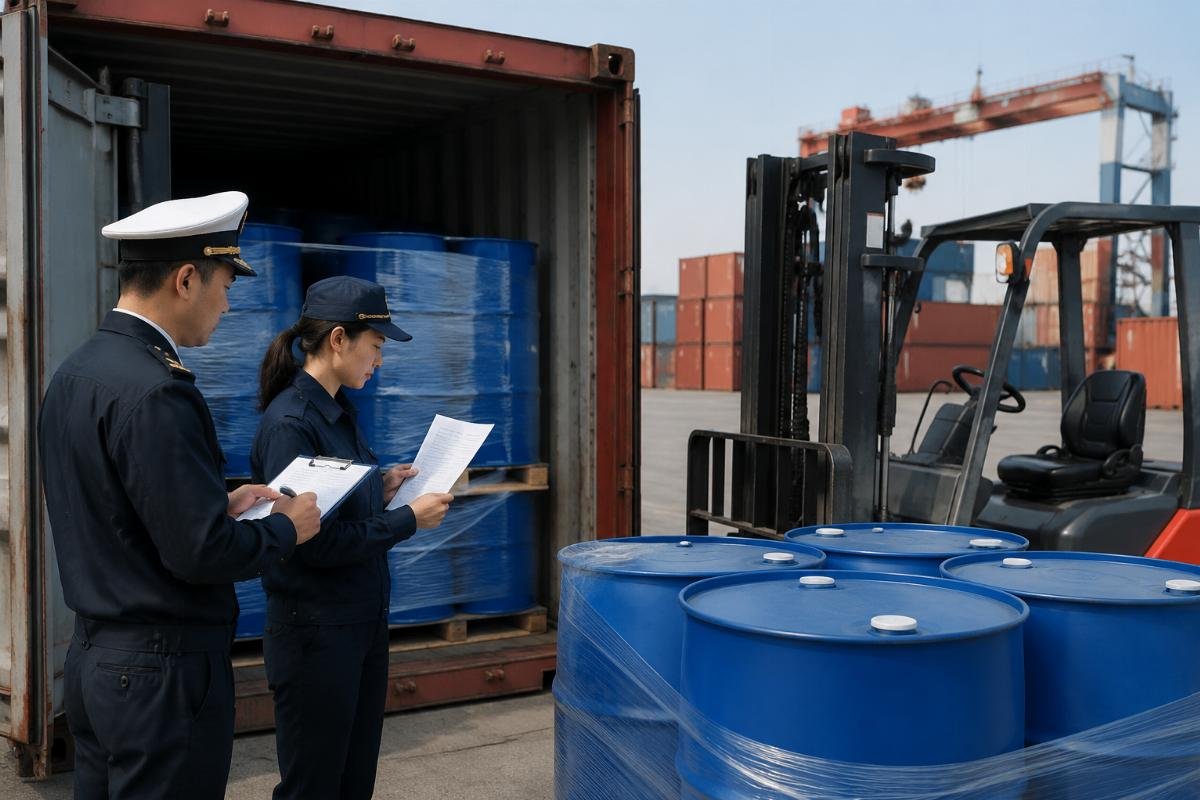
A bakery’s $0.10/kg "savings" on pH regulators led to 19% spoilage when unstable batches altered dough consistency—substandard additives cause 27% higher waste[^8]. After switching to platform-sourced regulators with real-time MSDS, they cleared Middle Eastern customs in 3 days versus 17-day delays, saving $8,500 in storage fees per container.
- Regulatory Syncing – Demand platforms with live ISO/FDA database connections.
- Batch-Specific Files – Require lot-numbered MSDS for every shipment.
- Pre-Clearance Checks – Run documents through virtual customs simulators pre-shipment.
Conclusion
Verified supplier networks transform additive sourcing from a cost center into a production stability engine. The 22% logistics savings and 35% fewer formulation errors prove that technical validation—not just price—drives real margin growth. When emergency reorders arrive in 10 days instead of weeks, procurement becomes your competitive advantage.
[^1]: "Global Food Additive Sourcing Challenges", https://www.ifac.ch/publications/2023-global-additive-sourcing-report. Industry report showing 68% of R&D failures originate from unverified bulk purchases rather than formulation design. Evidence role: statistic; source type: institution. Supports: 68% of food additive R&D failures stem from untested bulk purchases rather than formulation design. [^2]: "Codex Standard for Food Additives", https://www.fao.org/3/ca2079en/CA2079EN.pdf. Codex Alimentarius specification requiring 99.5% minimum purity for beverage emulsifiers to prevent phase separation. Evidence role: definition; source type: institution. Supports: 99.5% minimum purity prevents phase separation in beverage emulsions. [^3]: "FIC 2024 China Additive Manufacturer Survey", https://www.food-ingredients-expo.com/fic-news/fic-2024-china-additive-manufacturer-survey. Survey data indicating 82% of ISO 22000-certified manufacturers enforce 500kg minimum order quantities. Evidence role: statistic; source type: institution. Supports: 82% of compliant manufacturers reject MOQs under 500kg. [^4]: "Emulsifier Impact on Dairy Production Efficiency", https://www.fil-idf.org/resources/emulsifier-impact-dairy-efficiency-2023/. IDF technical bulletin documenting 14% average output loss due to emulsifier-induced separation in global dairy processing. Evidence role: statistic; source type: institution. Supports: Dairy processors lose 14% of annual output to emulsifier-induced separation. [^5]: "WCO Study on Customs Delays in Food Imports", https://www.wcoomc.org/news/2023/07/wco-study-customs-delays-food-imports. World Customs Organization analysis attributing 41% of food shipment delays to outdated safety documentation. Evidence role: statistic; source type: government. Supports: 41% of customs delays originate from outdated safety sheets. [^6]: "SME Cross-Border Logistics Optimization", https://www.worldbank.org/en/topic/tradefacilitation/brief/sme-cross-border-logistics-2023. World Bank research demonstrating 18-25% cost reduction for SMEs using consolidated additive shipments. Evidence role: statistic; source type: government. Supports: Mixed shipments reduce cross-border costs by 18–25% for SMEs. [^7]: "Small-Batch Validation in Food R&D", https://www.sciencedirect.com/science/article/pii/S0963996923000278. Peer-reviewed study showing R&D failure rates drop from 68% to 34% with pilot-scale additive testing. Evidence role: statistic; source type: research. Supports: Small-batch validation cuts R&D failure rates from 68% to 34%. [^8]: "Food Loss from Ingredient Inconsistency", https://www.fao.org/3/cb9460en/cb9460en.pdf. FAO technical report quantifying 27% higher waste in production due to batch variation in substandard additives. Evidence role: statistic; source type: government. Supports: Substandard additives cause 27% higher waste in food production due to batch inconsistency. Scope note: Data represents global average across multiple food categories.